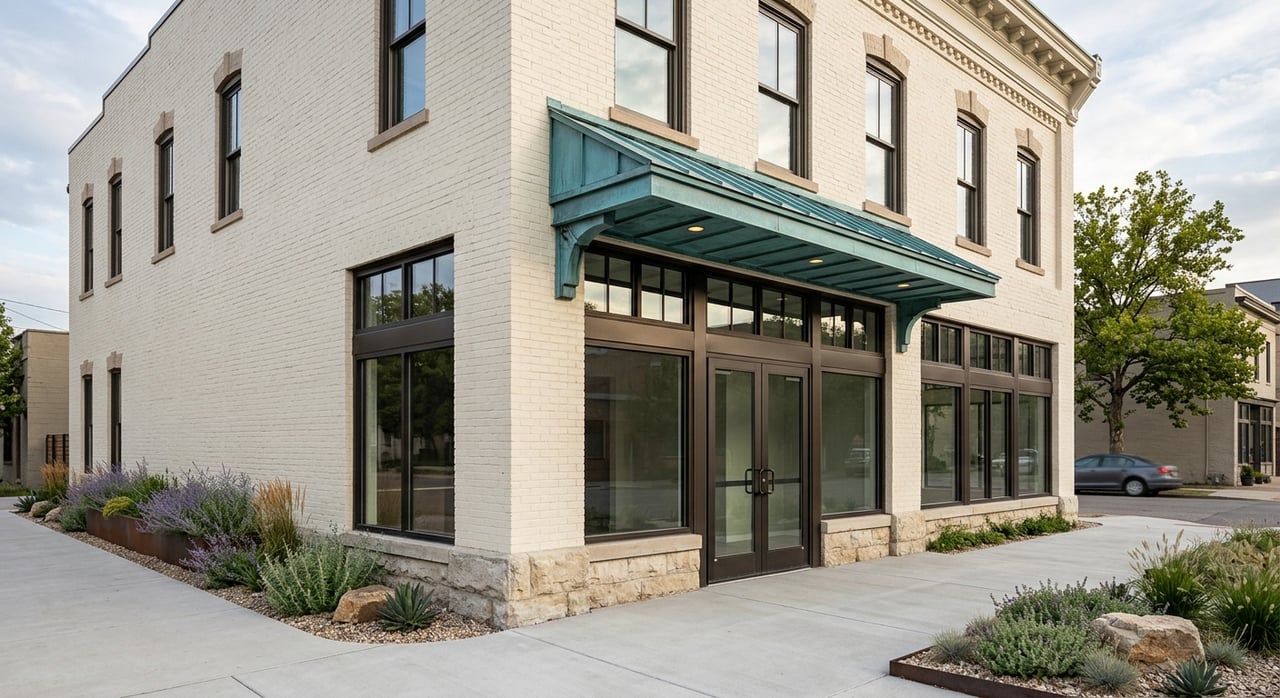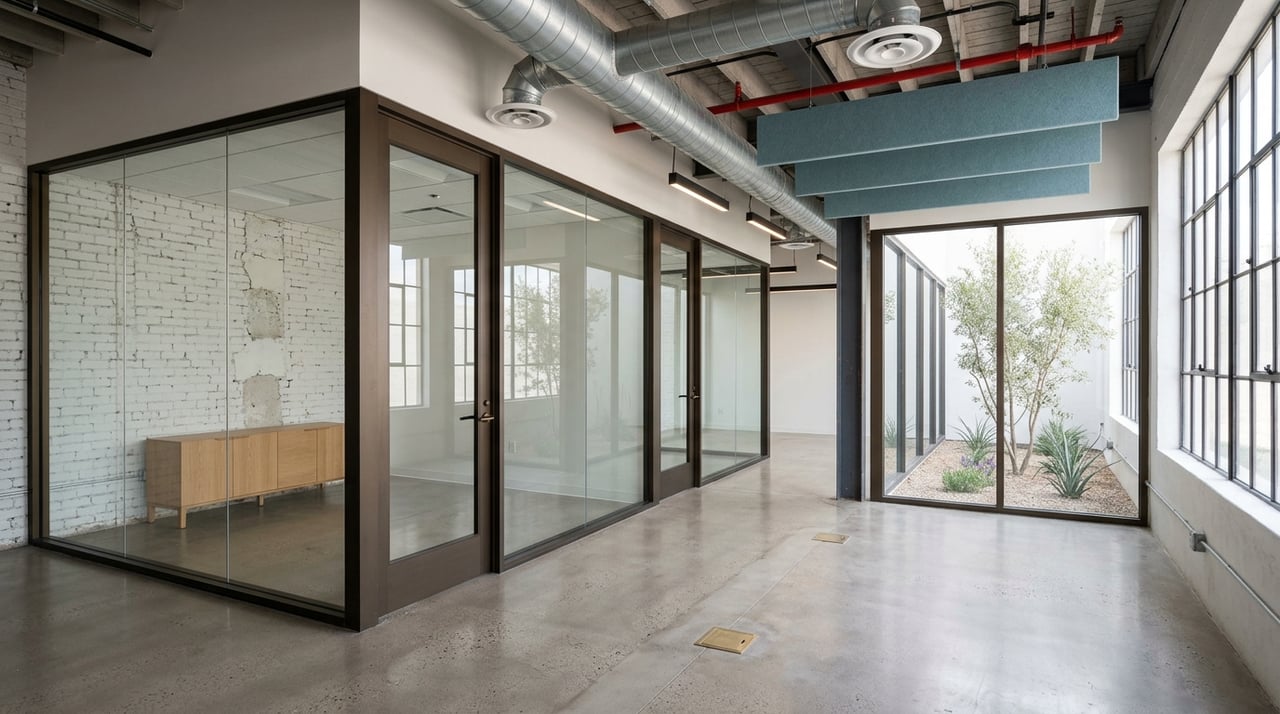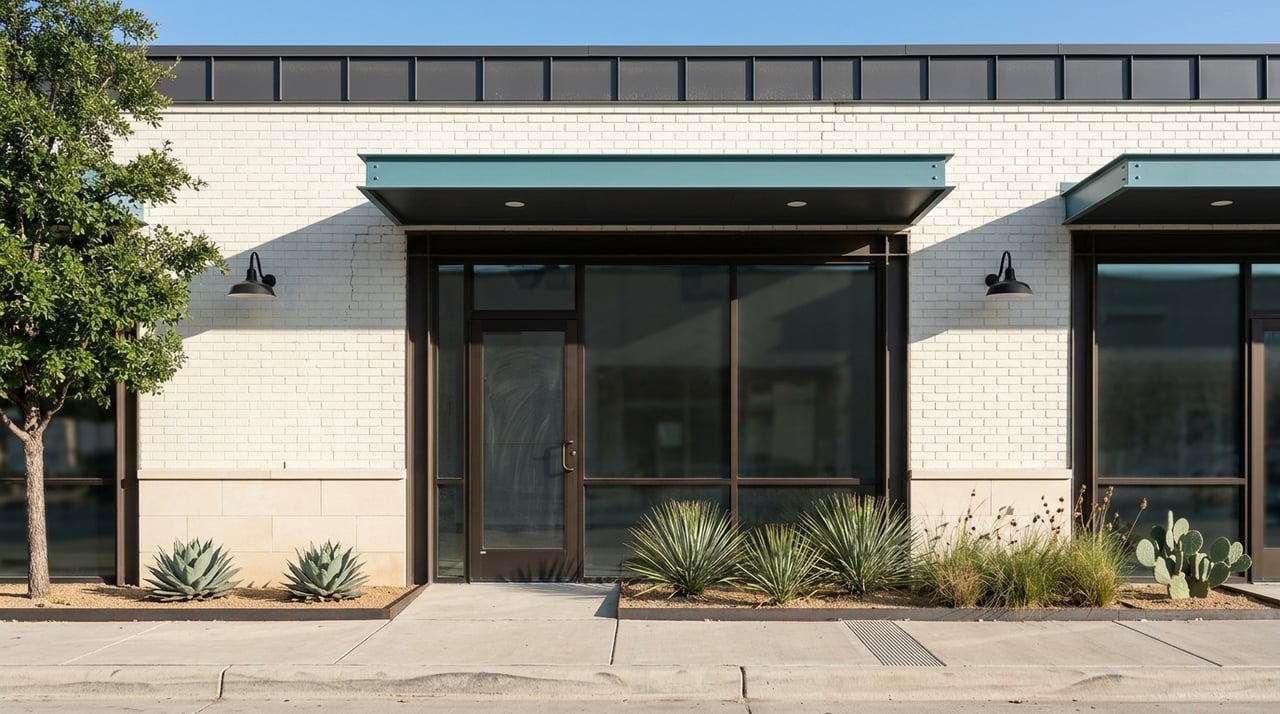
If you are trying to decide whether to buy or lease commercial space in Austin, the answer is rarely as simple as “owning is better” or “leasing is cheaper.” Your best move depends on how much cash you want to commit up front, how much control your business needs, and how long you expect to stay in the space. In a market like Austin, those questions matter even more because office, retail, and industrial conditions are moving in different directions. Let’s dive in.
Start With Austin Market Conditions
The buy-versus-lease decision looks different depending on the type of space you need. In Austin, office users, retailers, and light industrial tenants are not facing the same level of competition or pricing pressure right now.
For office space, conditions are relatively flexible. CBRE’s Austin office figures for Q1 2026 reported 238,200 square feet of positive net absorption, more than 110 tenants seeking over 4.4 million square feet, and a shrinking construction pipeline of 756,000 square feet expected to be fully delivered by the end of Q3 2026. At the same time, Cushman & Wakefield reported citywide office vacancy at 27.1% in Q1 2026, which means many office users may have more room to negotiate lease terms than they would in a tighter market.
Retail is a different story. Partners Real Estate reported Austin retail vacancy at 3.4% in Q4 2025, with average asking rent of $26.57 per square foot and CBD asking rents of $44.90 per square foot. If you are a restaurant operator or another business that depends on a specific storefront location, limited availability can shape your decision as much as your budget does.
Industrial and flex space sits somewhere in between. Cushman & Wakefield’s Austin market report showed industrial vacancy at 21.9% in Q4 2025. For studios, makers, and businesses that can adapt to industrial-style space, that may create more leasing leverage than you would find in retail corridors.
Focus On Three Core Questions
Before you compare listings, it helps to center your decision on three practical questions. These questions often reveal the right path faster than just comparing monthly occupancy costs.
How Much Cash Do You Need Up Front?
Leasing usually preserves cash. That can be important if you need working capital for staffing, equipment, inventory, or tenant improvements that are not covered by a landlord.
Buying typically requires more money up front. Even if financing reduces the initial outlay, you still need to account for down payment requirements, due diligence costs, closing costs, and the ongoing responsibility of owning the property.
There can also be different tax treatment depending on how your business is structured and how the property is used. The IRS notes that business rent may generally be deductible, while ownership may create deductions tied to mortgage interest, property taxes, and depreciation. Because the details are situation-specific, this is a decision to review with a CPA rather than handle by rule of thumb.
How Much Control Do You Need?
If your business needs custom layout, brand-driven finishes, acoustic treatment, signage control, or long-term improvements, buying can be appealing. Ownership usually gives you more control over how the property evolves over time.
That said, control is not absolute. In Austin, both owners and tenants still need to work through city processes when improvements, remodels, or use changes are involved. The City of Austin’s commercial plan review process applies to new construction, remodels, revisions, changes of use, and certificates of occupancy or compliance.
How Long Will You Stay?
Time horizon is one of the biggest decision points. If you expect your business to move, grow quickly, or test a concept before making a long commitment, leasing often makes more sense.
If you expect to stay put for years and you want to lock in control over a strategic location, buying can become more attractive. Over a long enough period, ownership may help you build equity while avoiding repeated lease negotiations and rent resets.
Understand The Real Cost Of Ownership
Owning commercial property in Austin can create long-term value, but it also comes with responsibilities that buyers sometimes underestimate. Monthly debt service is only one part of the picture.
Property taxes are a major factor. The Travis Central Appraisal District appraises property at 100% of market value, and business owners need to track deadlines such as personal property renditions due April 15, property tax protests due May 15, and taxes due by January 31 before becoming delinquent on February 1.
The tax rate itself is also layered. The City of Austin lists a FY 2025-26 city property tax rate of $0.574017 per $100 of taxable value, while Opportunity Austin notes a typical Austin/Travis total property tax rate of 1.9818 per $100 in 2024, with total rates varying based on local taxing entities and assessments. That means two properties with similar asking prices can carry very different ownership costs.
Business owners should also keep entity-level planning in mind. Texas franchise tax rules still apply to many taxable entities, even though Texas has no state income tax, and the no-tax-due threshold for reports due in 2026 and 2027 is $2.65 million. If you are considering buying through an LLC or another entity, your CPA should be involved early.
Leasing Is Not Always The Faster Option
Many business owners assume leasing gets them open more quickly. Sometimes that is true, but not always.
If the leased space needs a change of use, updated certificate of occupancy, or building review, timing can still be shaped by city approvals. Austin’s small-business permitting guidance explains that change-of-use reviews may require an updated Certificate of Occupancy, site plan exemption, and building plan review.
The good news is that the process has improved. According to the city, as of October 1, 2025, change-of-use reviews were reduced from 11 disciplines to three, shortening the typical timeline from about two months to about two weeks. Commercial plan review timelines may also run about 7 to 25 business days depending on the scope, which means your deal timeline should include permitting review whether you plan to buy or lease.
When Leasing Often Makes Sense In Austin
Leasing can be the stronger choice when flexibility matters more than control. In Austin, that is especially relevant for users who want optionality in a changing market.
For office users, today’s market may give you room to negotiate on rent, term length, tenant improvement allowances, or expansion rights. Creative firms, agencies, and studios that want a presence in places like Downtown or other inner-Austin corridors may find leasing to be a practical way to secure space without overcommitting capital.
For restaurants, leasing can also be the cleaner path when you are still testing a concept or preserving cash for equipment and working capital. In tighter retail corridors, buying may not even be a realistic option if available inventory is limited.
When Buying May Be Worth It
Buying may be worth the extra complexity when your business needs stability, customization, and a long-term home. It can also make sense when the property itself is part of your growth strategy.
An established restaurant group, owner-occupant, or creative business may prefer ownership if the location is strategic and the build-out is highly specialized. If you know you want to stay for the long haul, owning can protect your operating base and allow you to invest in improvements with a longer payoff horizon.
Financing tools may help make ownership possible. The SBA 7(a) loan program can be used to acquire, refinance, or improve real estate and buildings, with a maximum loan amount of $5 million and real estate maturity up to 25 years. The same SBA resource explains that 504 loans offer long-term fixed-rate financing for major fixed assets, including existing buildings, land, and new facilities, though they cannot be used for working capital, inventory, or speculative rental real estate.
Austin Scenarios To Think Through
Different business types usually land on different answers. Here are a few common Austin scenarios.
Restaurants And Hospitality
If you run a restaurant, bar, or hospitality concept, leasing often gives you more flexibility while protecting cash for operations and equipment. In a tight retail market, available spaces may be limited, so your decision may come down to what is actually on the market and how much improvement work the site requires.
Buying can make sense when your concept is established, the location is central to your brand, and you expect to stay long enough for the investment to pay off. You will still want to review change-of-use issues, certificate of occupancy needs, and build-out timing before you commit.
Creative Firms And Studios
If you lead a creative office, design firm, studio, or small team, Austin’s office market may support a lease-first strategy. A looser office environment can create room to negotiate terms while keeping your business nimble.
Buying may still be attractive if your workspace is highly customized or your team values long-term control over layout and identity. This is often true when the space itself plays a visible role in your brand.
Owner-Occupants
If you are an owner-occupant looking at buying, the question is bigger than whether the monthly payment looks manageable. You also need to evaluate taxes, maintenance, lender requirements, and the cost of improvements.
That is why owner-users should model the deal with a lender, CPA, and attorney before making a final decision. Financing tools can help, but eligibility and use rules vary.
Build Your Decision Around A Real Plan
In Austin, the right answer depends on your property type, submarket, budget, and timeline. A retailer looking for a storefront in a tight corridor is solving a different problem than a studio comparing creative office options or a business owner looking for flex space with room to grow.
The strongest approach is to compare buy and lease options side by side with realistic assumptions for cash required, permitting timing, taxes, build-out, and exit flexibility. When you do that, the decision usually becomes clearer.
If you want help weighing your options in Austin, Lead Commercial offers senior-led brokerage and project advisory for tenants, buyers, owner-occupants, and neighborhood investors. Whether you are comparing lease terms, evaluating a purchase, or planning for permitting and construction coordination, the goal is the same: a space decision that fits your business for the long run.
FAQs
What should Austin business owners compare first when deciding whether to buy or lease commercial space?
- Start with three things: your up-front cash needs, the level of control your business requires, and how long you expect to stay in the space.
How does the Austin office market affect a lease-versus-buy decision?
- Austin’s office market has relatively high vacancy, which may give office users more choices and stronger negotiating leverage when leasing.
Why is the buy-versus-lease decision tougher for Austin retail space?
- Austin retail vacancy has been much tighter than office, so limited availability and stronger landlord pricing power can narrow your options.
Do Austin commercial tenants need permits before opening a leased space?
- Yes, in some cases. A leased space may still need a change-of-use review, building plan review, or an updated Certificate of Occupancy before you can open.
What taxes should Austin buyers consider before purchasing commercial property?
- Buyers should review local property taxes, appraisal practices, filing deadlines, and any entity-level tax planning questions with a CPA.
Can SBA financing help Austin owner-occupants buy commercial property?
- Yes. SBA 7(a) and 504 programs may help eligible buyers finance real estate, but loan structure, eligibility, and permitted uses should be reviewed with a lender and advisors.