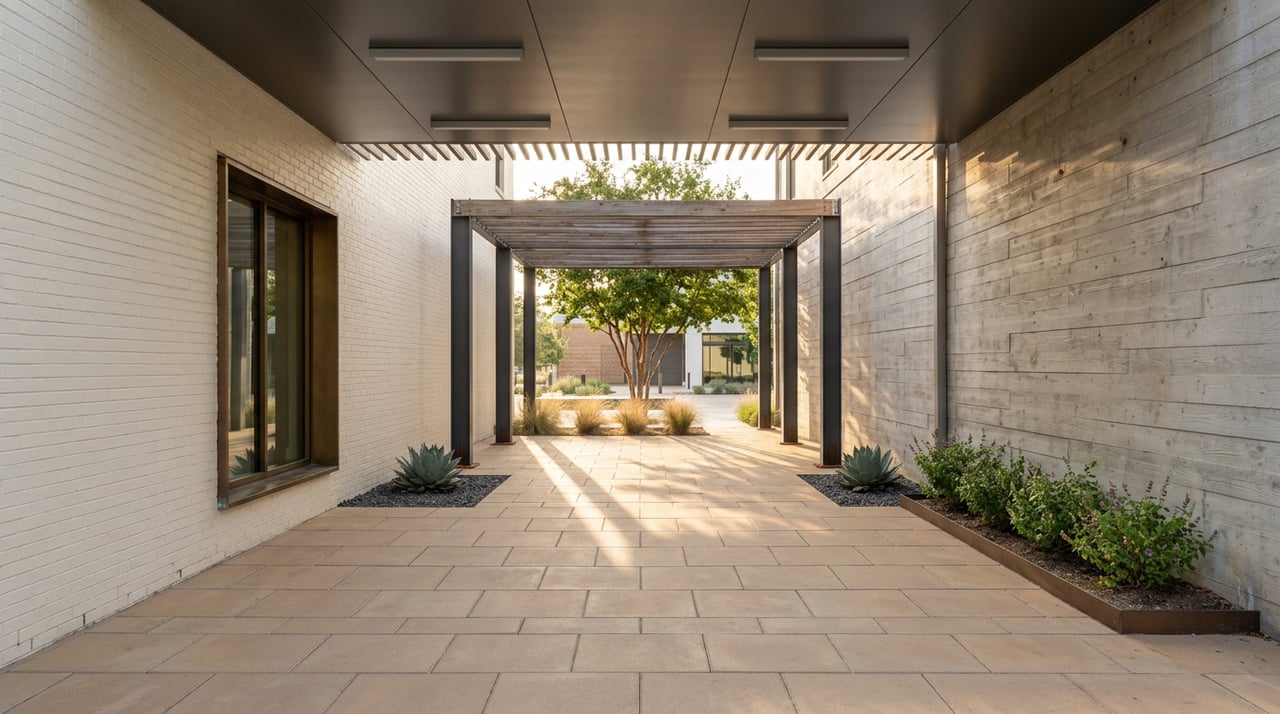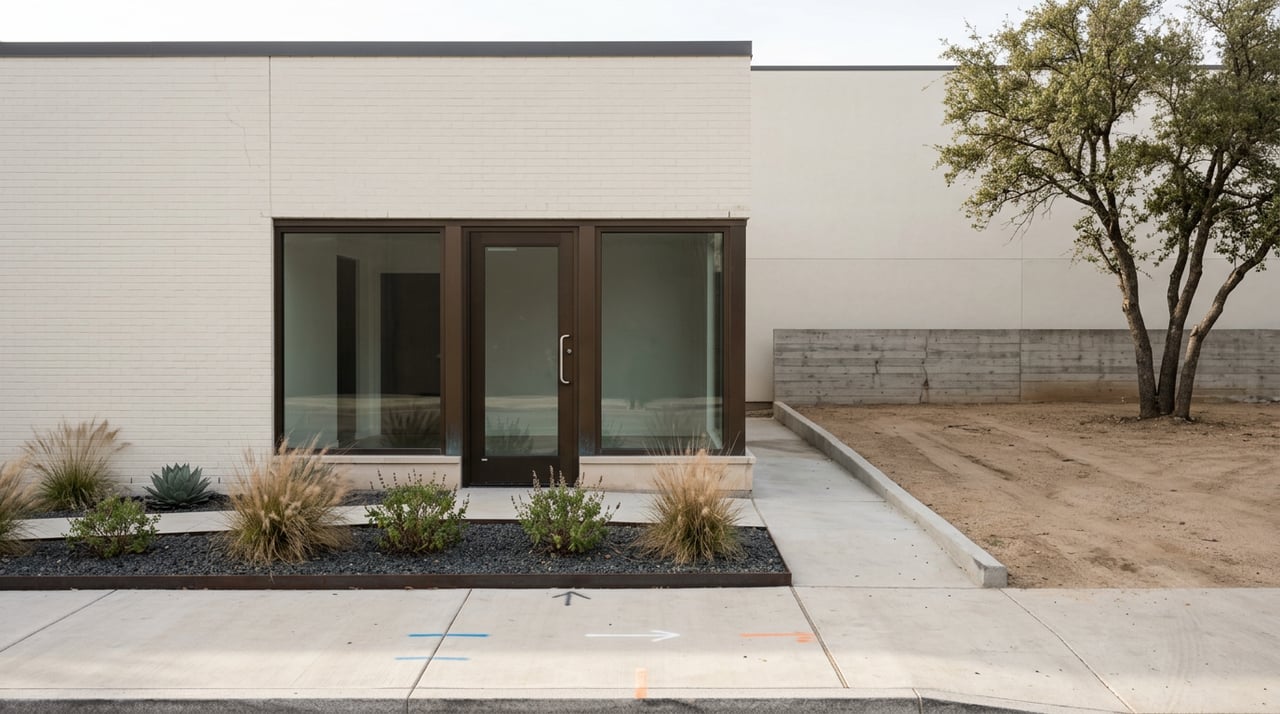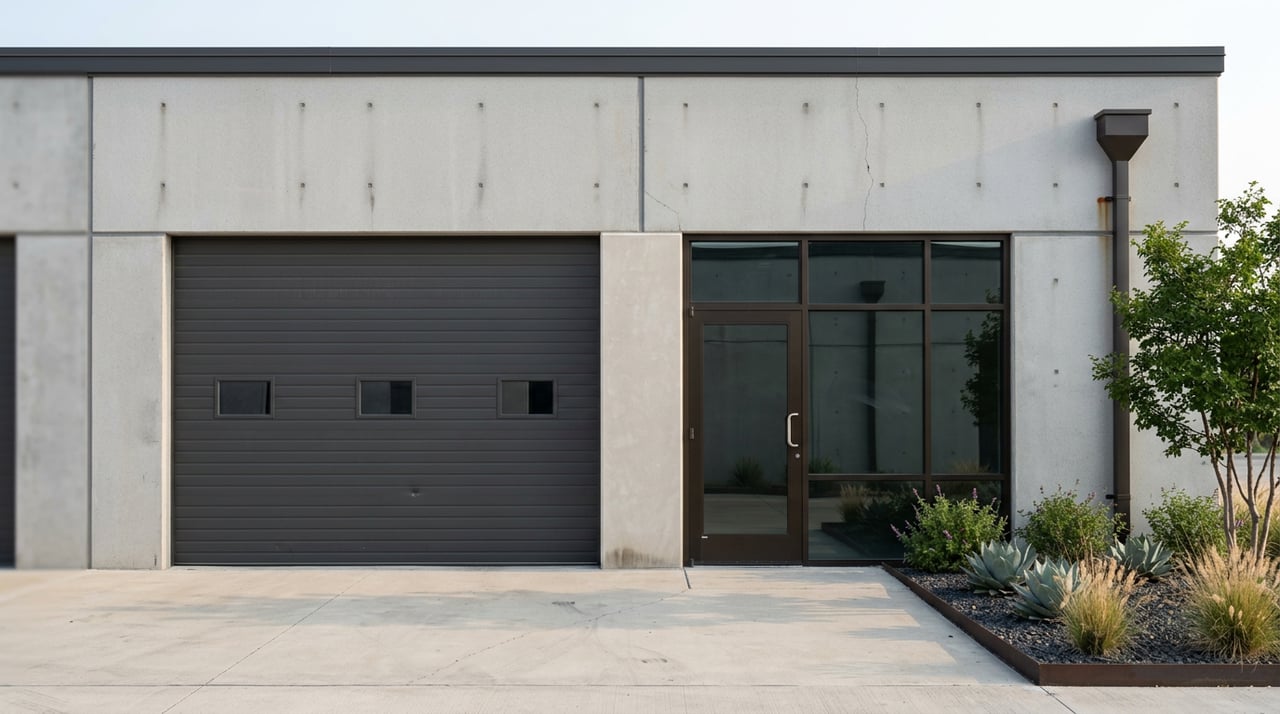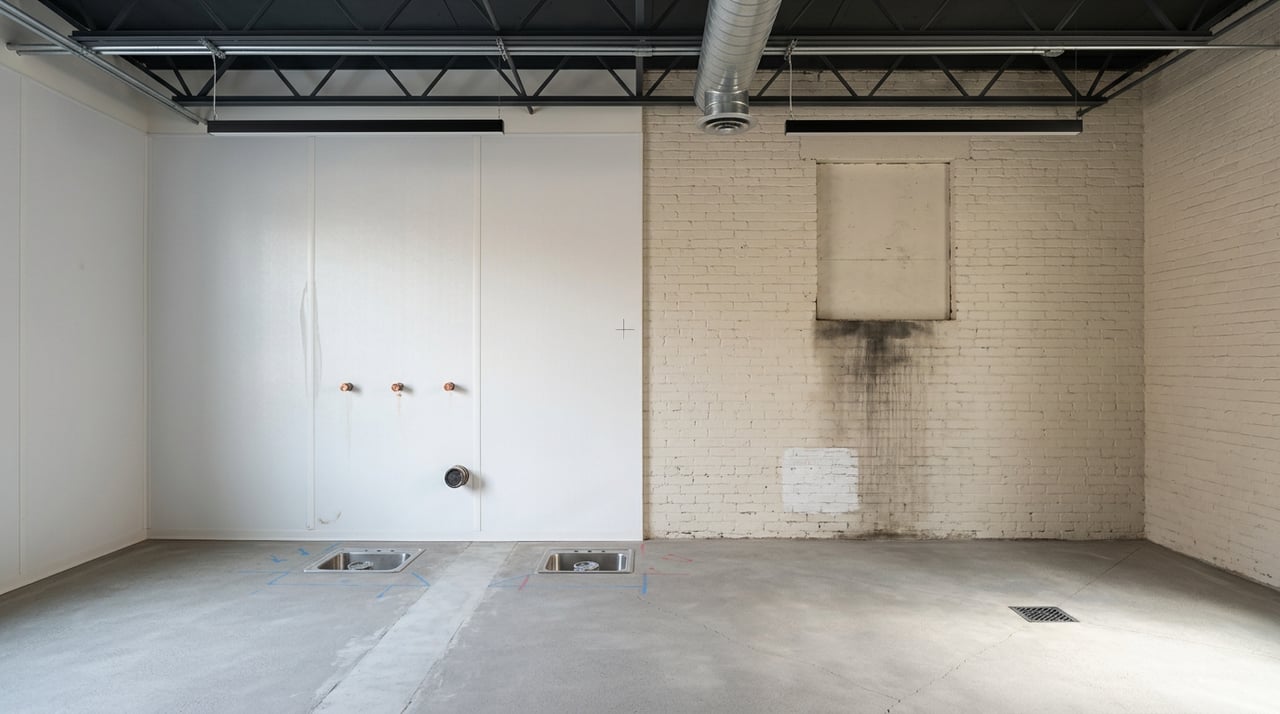
Most first-time operators in Austin sign a lease believing the building permit is what stands between them and opening night. It isn't. On a change-of-use conversion, the document that actually sets the pace is a one-page letter from Austin Water's Industrial Waste division, and if it isn't in hand before equipment gets ordered, everything downstream slips.
That is the mechanic worth understanding before the ink dries on any Austin retail or office space you plan to turn into a restaurant. The building permit, the TABC application, and the health permit all move on parallel tracks, but the Industrial Waste Approval Letter is the one that gates plumbing rough-in, equipment purchase, and ultimately the Certificate of Occupancy inspection. Read it wrong and month four becomes month nine.
The four tracks, and how they actually stack
An Austin restaurant conversion runs four permitting workstreams at once. The tracks look independent on paper. They aren't.
- DSD commercial building permit. Filed through the Austin Build + Connect portal. Initial plan review runs 15 to 25 business days, with resubmittals reviewed in about 10 business days. Most commercial projects go through 2 to 3 correction cycles before final approval, each cycle adding roughly 10 business days, so total time from application to permit issuance for a typical commercial project is 6 to 12 weeks when corrections are factored in.
- Austin Public Health food establishment plan review. Estimated cost $700 to $2,500 with a timeline of 5 to 10 weeks, verified February 2026. Applications go to APH at 1520 Rutherford Ln.
- TABC Mixed Beverage Permit, if alcohol is on the menu. TABC Mixed Beverage Permits typically take 60 to 90 days to process.
- Certificate of Occupancy. More complex projects involving significant construction or specialized uses like restaurants typically take 1 to 3 months.
None of these can finish without the Industrial Waste Approval Letter from Austin Water. It sits behind track one, feeds track two, and shows up again at the CO inspection.
Why the IW letter is the real critical path
Here is the sequence that catches operators off guard. Austin Water reviews the kitchen plumbing plan, calculates fixture units, applies a three-gallon-per-minute multiplier, and issues an Approval Letter that specifies the exact grease interceptor size and design. Until that letter exists, the building permit plan review cannot close, the equipment order cannot be finalized, and the plumbing rough-in cannot pass inspection.
The city's own guidance is direct about the risk. Do not purchase a grease trap or interceptor without obtaining a building plan approval including an Industrial Waste approval letter specifying the size and design of the interceptor that will be required; purchasing an interceptor prior to Industrial Waste approval exposes the purchaser to risk of rejection and replacement costs.
Two hard sizing rules matter more than most brokers or general contractors flag during lease negotiation:
- Grease traps and interceptors less than 100 gallons minimum liquid holding capacity will not be approved for installation.
- Commercial food preparation facilities that use a dishwasher must install a minimum 500-gallon grease interceptor, providing the required seven-minute retention time in compartment 1 and five-minute retention time in compartment 2, for 12 minutes total.
A 500-gallon gravity interceptor is not a piece of countertop equipment. It is a concrete vault, and where it lands on the site drives everything from the slab cuts to whether the back-of-house layout you drew at lease signing is actually buildable. A bungalow conversion on East Cesar Chavez with no back yard and a shared alley is a fundamentally different project from a former retail space with a rear parking pad, and Austin Water will decide which one it is.
Ongoing compliance is written into the same chapter of city code. Grease traps must be pumped out at least once every ninety days or sooner if 50 percent or more of the wetted height of the trap is made up of grease and solids under § 15-10-197. Austin Water samples wastewater to enforce a FOG discharge limit of 200 mg/L. Undersize the vault to save on installation, and you buy yourself a pump-out cadence that eats the savings inside a year.
Change of use is what pulls the trigger
Operators reading generic guides on "Austin restaurant permits" often miss the specific mechanic that makes their project harder than the last tenant's. Converting a retail store, office, or personal services space into a food use is a change of use. That single classification determines almost everything.
In Austin, a new Certificate of Occupancy is required if you are moving into a newly constructed building, changing the use of the space, making substantial renovations that affect egress, occupancy load, or safety systems, if the previous Certificate of Occupancy has been revoked or is no longer valid, or if there has been a significant period of vacancy.
Change of use also removes the shortcut most tenant improvement projects rely on. A site plan exemption will not work if you are changing the fundamental use of the space, for example converting a retail store into a quick-service restaurant, per Land Development Code Section 25-5-2. Any change of use automatically triggers the need for a full site plan, adding significant time and complexity to your project timeline, and this is a common stumbling block for expanding brands entering new spaces.
Two adjacent triggers show up frequently on the inner-east corridors Lead Commercial works:
- Older building stock. Demolition or relocation permits are needed for tearing down or moving structures, especially if the building is over 50 years old or in a historic overlay district, and these permits often trigger a review by the Historic Landmark Commission. On MLK, East 11th, or East Cesar Chavez, that is most of the interesting buildings.
- Overlay design standards. Corridors like MLK and East Riverside sit inside Subchapter E, which affects site design, screening, and frontage.
What actually stalls a project
Once IW approval is in motion, the second most common reason a conversion drags is documentation quality at food plan review. Missing grease trap documentation accounts for 34 percent of rejections; the fix is to include your grease trap maintenance contract and the trap's GPM rating with your food establishment permit application, because Austin Water requires both and most applicants only submit one.
The rest of the failure modes cluster in predictable places. Food grinders and disposals have been prohibited in commercial kitchens in the Austin Water jurisdiction since 2008. A dishwasher pulled from a used-equipment lot with a legacy disposal attached will fail plan review before it fails inspection. Fire suppression is its own line item, with Austin Fire Department requiring an Ansul or equivalent system under every cooking hood and semi-annual inspections after opening.
Health department requirements travel with the space. The pre-opening inspection is required to obtain a Certificate of Occupancy after new or remodeled construction to ensure the approved plans were followed, or before the ownership of an establishment is transferred to another entity or individual, and the facility must pass this inspection before a permit can be issued. Which means a lease assignment from one restaurant operator to another is not a free ride. The pre-opening inspection resets.
One lever that buys revenue back
If the timeline gets away from you, Austin gives operators a modest tool to open the front-of-house before the full CO is issued. A Temporary Certificate of Occupancy may allow a property to be occupied, stocked, or furnished before issuing a final Certificate of Occupancy, and TCOs are available for both commercial and residential properties.
There is also a patio-side lever worth pricing into the deal. Austin City Council has authorized a Parking Lot Patio Permit allowing businesses to create a seating or retail area in owned or leased parking lots, with applicants applying through the Development Services Department and being inspected by the Austin Fire Department. On a bungalow conversion with a small dining room, an approved patio can be the difference between a viable pro forma and a marginal one. It is not a substitute for the CO, and it will not accelerate the IW letter. It expands the revenue footprint once the building is open.
Reading a change-of-use deal at signing
The questions worth answering before the lease is signed are the ones that determine whether the IW letter is a two-week formality or a four-month redesign:
- Is there an existing, approved grease interceptor on site, and if so, is it sized for the intended fixture count including any dishwasher?
- If a new interceptor is needed, is there physical space on the parcel for a 500-gallon gravity unit, or will the project require an engineered or hydromechanical alternative?
- Is the space in a corridor overlay, and does the change of use trigger a full site plan?
- Is the building 50 years or older, and does any planned facade or structural work invite Historic Landmark Commission review?
- Was the previous tenant a permitted food establishment with a valid CO, or is the CO stale?
Those five answers, gathered before signing, will tell you which of the four permit tracks is actually your critical path. In most Austin conversions, it is the one running through Austin Water.
FAQ
Can the TABC application run in parallel with the building permit? Yes. The Mixed Beverage Permit takes 60 to 90 days, so everything else can be done in parallel while you wait; this is your critical path. For a full-service restaurant with a bar program, filing TABC first is the standard playbook.
Do I need a new CO if I am taking over a space that was already a restaurant? You may be able to use an existing Certificate of Occupancy if you are taking over a space with the exact same use type, making only cosmetic changes, and the previous certificate is still valid and compliant with current codes, and to verify you contact Austin's Development Services Department with the property address and details about your intended use. A pre-opening health inspection is still required on an ownership transfer.
Is there any way to avoid a grease interceptor entirely? Only for a narrow set of concepts. Certain facilities may request to operate without a grease trap or grease interceptor, such as those serving pre-packaged foods in the original unopened container, providing drinks only, or cutting fruits. A coffee bar with no hot food prep is a candidate. A full kitchen is not.
What happens if I open without the right permits? Operating without proper permits can result in fines ranging from $500 to $2,000 per violation per day, plus mandatory closure until permits are obtained. The economics of "opening soft" without a CO do not pencil.
Every Austin restaurant conversion is a sequence of decisions that starts before the lease is signed and ends at the pre-opening inspection. The right broker is in the room for both. If you are pricing a space on an inner-east corridor and want the permitting math done before you commit, Lead Commercial works these deals end to end. Let's talk about your property.