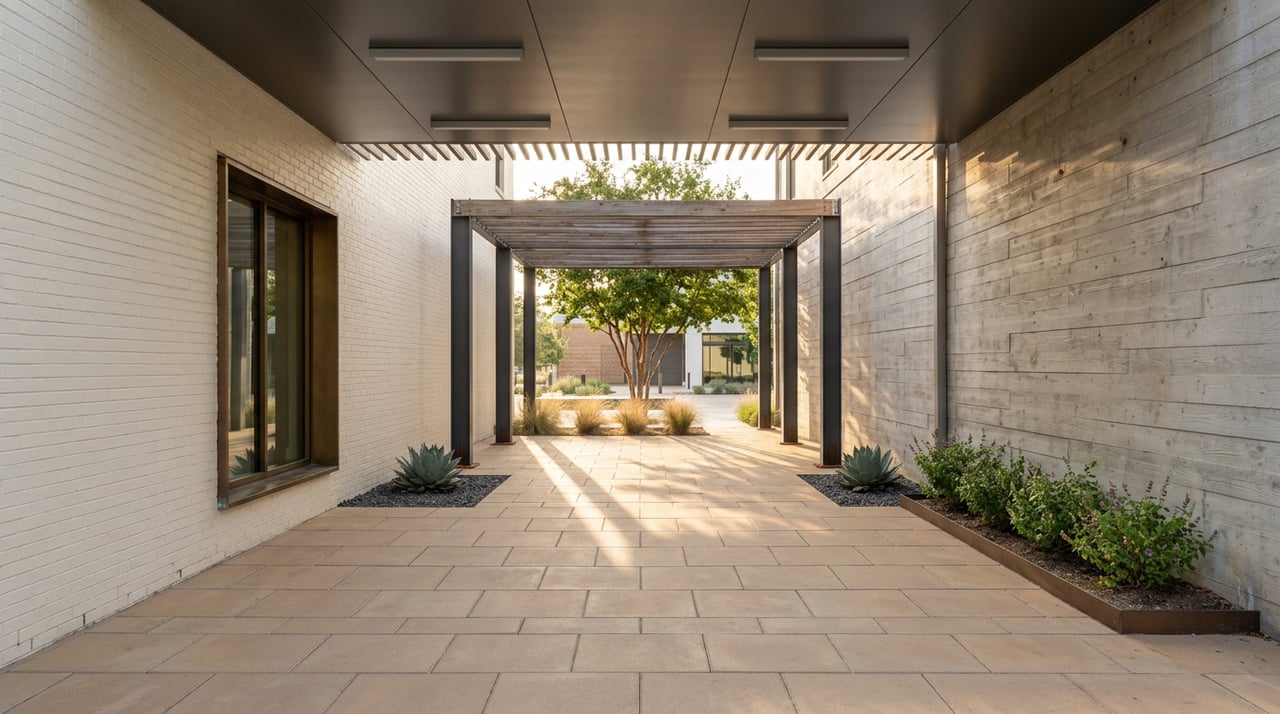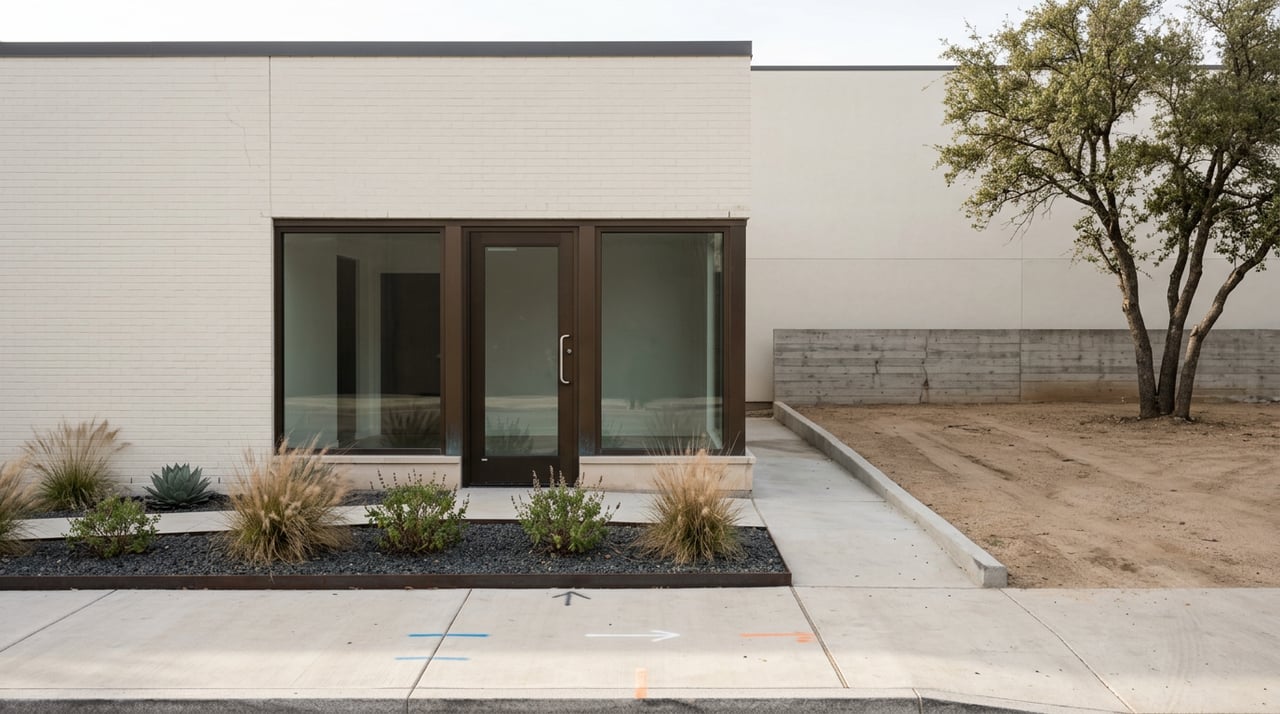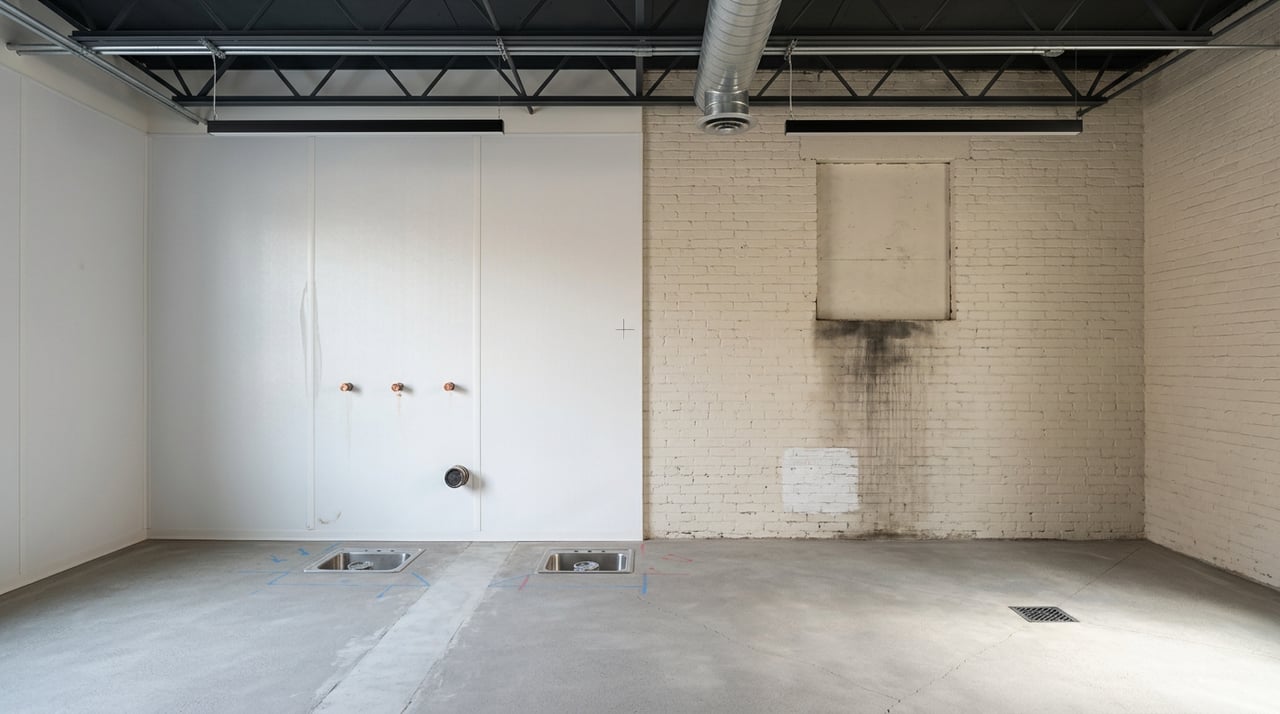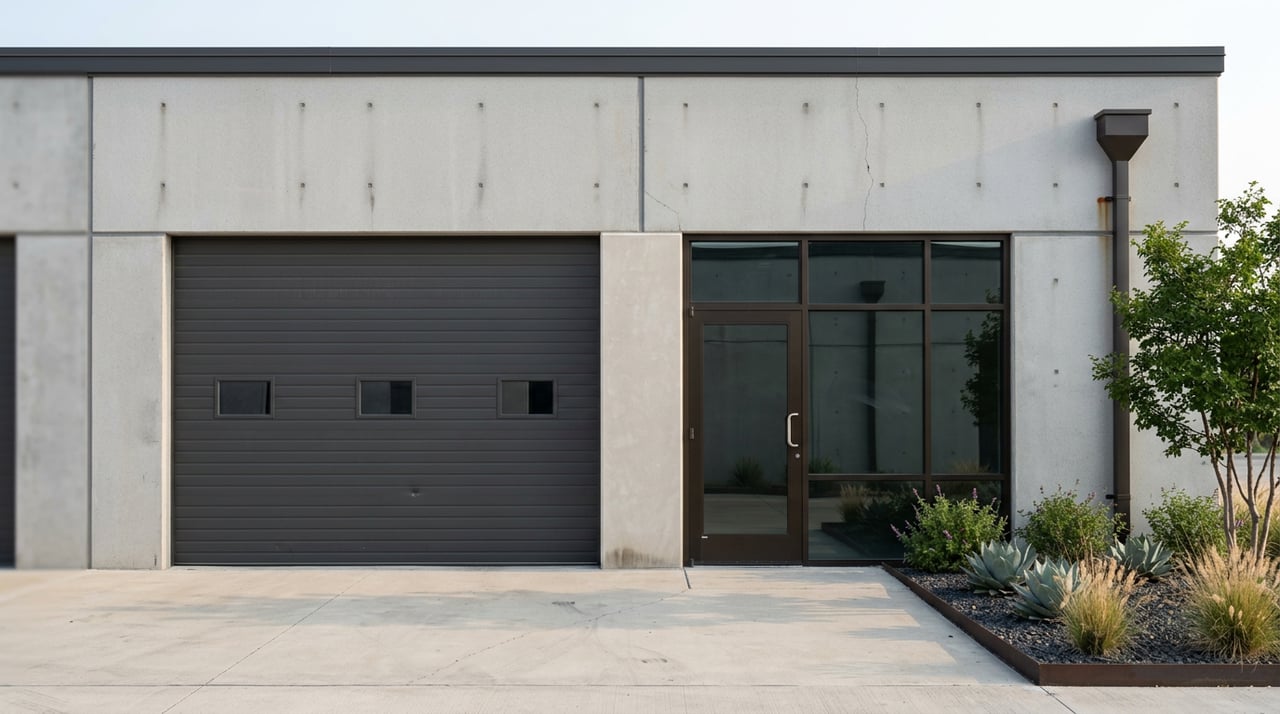
A restaurateur looking for a commissary near East MLK walks in expecting leverage. She has read the reports. Austin industrial vacancy is at a two-decade high, deliveries are outpacing absorption, asking rents are down year over year. She has a 6,000-square-foot flex requirement, a modest TI budget, and a plan to open by next spring. The first three tours quote her numbers that look nothing like a soft market, on buildings that were pitched to her as flex but underwritten to something else entirely.
She is not reading the market wrong. The market is two markets.
The Austin industrial vacancy headline is a big-box problem. For a small operator on the inner east side, the friction is the opposite: too little product at the right size, priced against retail underwriting rather than warehouse underwriting, inside overlays that shape what you can actually build out.
Where the glut actually sits
The Q1 2026 numbers agree on the direction and disagree, meaningfully, on the level. That spread is the first clue that "Austin industrial" is not one thing.
| Source (Q1 2026) | Overall vacancy | Notable detail |
|---|---|---|
| CBRE | fifth straight quarterly increase | +385,000 sf net absorption, still positive |
| Partners Real Estate | 15.7% | Above the 15.3% historic high last set in Q3 2003 |
| Matthews | 14.5% | Rents down about 1.1% YoY to roughly $14.17/sf |
| ECR | 17.0% warehouse / 14.5% flex | Rents on warehouse actually rose to $14.97/sf |
| Cushman & Wakefield (Q4 2025) | ~21.9% | Sharp YoY jump on deliveries |
| Colliers | 22.3% | Construction pipeline down to 7.5M sf |
The submarket breakdown is where the story sharpens. Partners put Georgetown at 28.4% and the southeast at 28.2% in Q1 2026, with Bastrop County at 3.7%. Hays County's 2026 completions are on track to nearly quadruple the prior year, according to Marcus & Millichap's 2Q26 outlook, which is why that submarket entered the year with vacancy running roughly 600 basis points above the previous quarter.
The deals filling that space are not small operators. Q1 2026 saw Baer Manufacturing take 606,000 sf at Crosspoint Phase II, ZT Systems sign 412,000 sf at GTX Logistics Park, and Skybox Datacenter absorb 469,000 sf at PowerCampus Austin. CesiumAstro bought the 267,000-sf West Austin Business Park portfolio from Velocis outright. The demand is real, it is tied to the AI, data center, and advanced manufacturing buildout, and it is largely happening outside the urban core. Elon Musk's March 2026 announcement of a $20 billion "Terafab" chip facility, siting undecided, points the same direction.
None of that softens a 6,000-square-foot ask on East MLK.
Why inner-east flex prices against retail, not warehouse
The clearest example is happening on one corridor. In March 2026, a Georgetown-based developer began lining up a nearly 10-acre retail-and-light-industrial project near the intersection of East Martin Luther King Jr. Boulevard and U.S. 183, first reported by the Austin Business Journal and summarized publicly by Hoodline. No named tenants, no timeline. The pitch is a mix: storefronts blended with light-warehouse bays.
Two miles closer in, Trammell Crow Company and High Street Residential are marketing The Block Yard, a four-acre transit-oriented project at East MLK and Alexander Avenue, directly adjacent to the Capital Metro MLK Light-Rail Station. The commercial component is 63,800 sf of creative office over 4,200 sf of ground-floor retail, boutique floorplates around 17,000 sf, 14-foot floor-to-floor heights, private terraces on every floor. One rail stop to Plaza Saltillo, two to downtown.
Further west, the Austin Free Press reported in April 2026 that Council approved a RunDog Real Estate project putting twin towers rising more than 400 feet along MLK, with a roughly $3.3 million contribution to the city's Affordable Housing Fund through the Downtown Density Bonus Program.
Three projects, one corridor, three different rent underwriters. None of them is pricing a small flex bay off warehouse comps in Georgetown. When new small-format space arrives inside a mixed-use envelope, it prices against ground-floor retail and creative office in that same envelope. That is the friction a small-bay tenant walks into on the east side, and it is the reason the ECR breakdown, showing flex vacancy at 14.5% versus warehouse at 17.0%, still understates how tight the inner ring feels.
The overlays that decide what you can sign
Before rent, before TI, the corridor decides what your space can legally be. Four overlays shape most small-tenant deals east of I-35:
- MLK Boulevard TOD Station Area Plan. A Specific Regulating District under the city's Future Land Use Map. The plan controls use, form, and parking around the light-rail station. Deals inside the TOD boundary follow the regulating plan, not base zoning.
- East 11th & 12th Street NCCD. A Neighborhood Conservation Combining District over the historically significant African American commercial corridors just south of MLK. Pedestrian-oriented development, signage consistency, and contextual architecture are baked in. Base zoning is overridden.
- CURE (Central Urban Redevelopment). A site-specific overlay east of I-35 that can unlock greater height or relaxed development standards through a single application. Useful for repositioning older stock, but it is a case-by-case tool, not a blanket right.
- Subchapter E. The city's commercial design standards. Outside the downtown overlay, most commercial and mixed-use projects have to comply. On MLK and East Riverside, compliance is often tied to incentives like additional FAR, lower parking minimums, or streamlined site plan review.
A single-tenant kitchen use in a 1980s tilt-wall is straightforward. A grease trap, a Type I hood, patio seating, and a new storefront system on a lot inside an NCCD is a different exercise entirely. City zoning case C14-2026-0002 gives a flavor of what small operators are competing with for repositioning attention: a 50,000-sf industrial warehouse from the 1980s on E MLK, behind a Popeyes, with roughly 40,000 sf of paved parking, is under active rezoning review one-third mile south of the Mueller Imagine Austin Activity Center. Corridor Mobility Plan investment on East MLK/FM 969 from US-183 to Webberville has been partially rescoped due to funding gaps, which affects how quickly frontage upgrades and turn lanes get resolved on redevelopment sites.
Reading a small-bay term sheet in this market
A few things worth pressure-testing before you sign east-side flex right now:
- Ask what the space is being underwritten as. If your bay sits inside a mixed-use envelope, the pro forma probably assumes retail-adjacent rents. That is negotiable, but only if you name it.
- Price the overlay into your TI schedule, not just your rent. Subchapter E, NCCD signage rules, and TOD regulating-plan requirements can add real weeks to permitting. A rent abatement structured against a realistic delivery date is worth more than a lower face rate.
- Watch the small-bay comp set, not the metro headline. ECR's flex-versus-warehouse split, roughly 250 basis points apart in Q1 2026, is the closer read for a sub-15,000-sf requirement. Georgetown at 28.4% is not your comp.
- Look at already-delivered product before build-to-suit. With the pipeline still elevated but deliveries slowing, tenants leasing existing improved space are avoiding the schedule risk that is catching build-to-suit users. Hoodline's March 2026 reporting quoted brokers describing "plenty of big-box options, tighter supply for small-bay and flex product." That imbalance is the market you are actually shopping.
FAQ
Is now a good time to sign a longer term? On big-box logistics in Georgetown or the southeast, landlords are dealing. On small-bay east-side flex, rent growth is flatter than the metro numbers suggest and concessions vary block by block. A five-year term with a fair-market renewal option protects you either way.
What if my use needs heavy power or a grease trap? Older east-side stock often needs service upgrades. Confirm feeder capacity and Austin Water service extension requirements before you commit. Sites near Austin-Bergstrom sit under airport overlay height and use restrictions worth checking early.
Does the MLK Light-Rail Station change my comps? Yes. Space inside the MLK TOD Station Area Plan is a different product than space three blocks north. Walkability, parking minimums, and allowable uses all shift.
The tenants who do well in a split market are the ones who stop shopping the headline and start shopping the corridor. That is the whole job right now.
If you are sizing up a small-bay flex requirement on the east side, or repositioning an older east-side building for a small operator, Lead Commercial works these corridors deal by deal. Let's talk about your property.