If you are opening, relocating, or refining a restaurant concept in Austin, the biggest question is not just Will people like the food? It is also whether your concept fits the rhythm of the block. Austin’s restaurant culture is deeply local, shaped by climate, patios, live music, food trucks, and corridor-by-corridor habits that change fast from one neighborhood to the next. This guide breaks down how Austin’s neighborhood restaurant culture works for operators, so you can think more clearly about concept fit, dayparts, and the kind of space your business actually needs. Let’s dive in.
Austin Restaurant Culture Starts With Place
Austin does not operate like a city with one main dining strip and a simple lunch-to-dinner pattern. It behaves more like a layered, all-day restaurant ecosystem, where coffee, brunch, happy hour, dinner, late-night traffic, and live music often overlap in the same corridor.
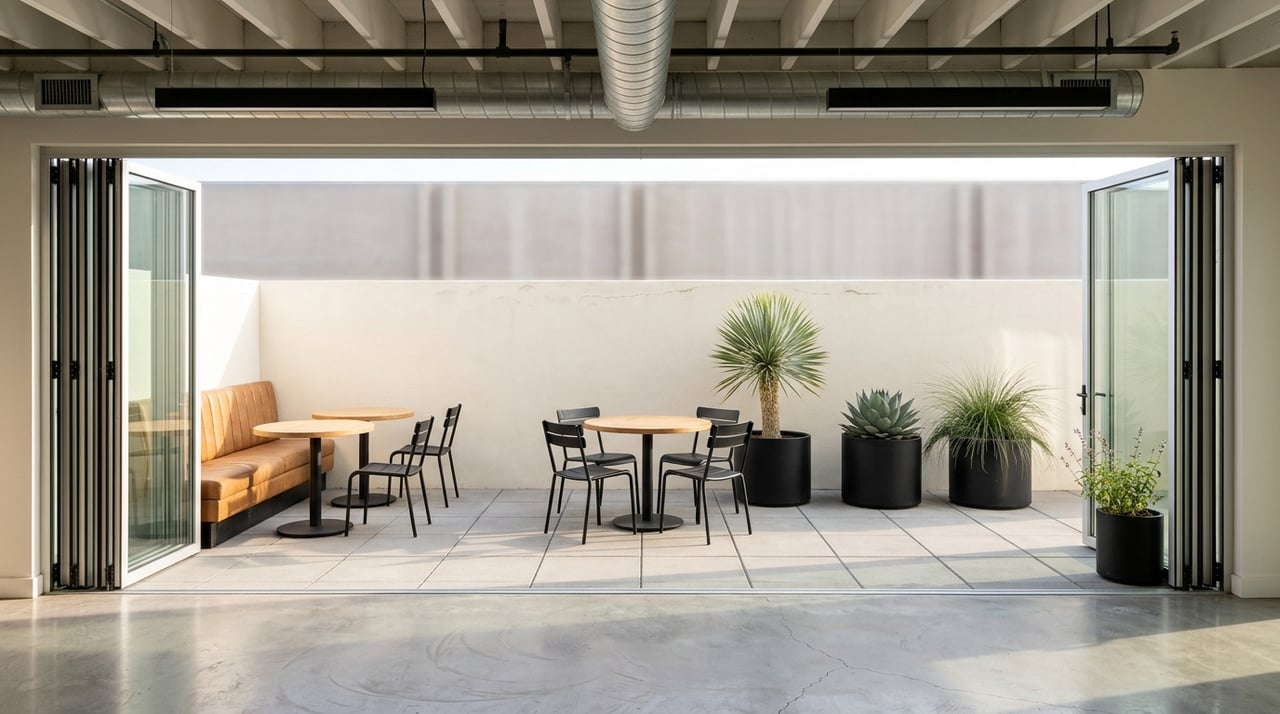
That pattern is shaped in part by the city’s climate. Austin’s long, hot summers and mild winters make patios, shaded outdoor rooms, and weather-aware seating an important part of the dining product. For many operators, outdoor space is not just a bonus feature. It is part of the business model.
The city also has specific permit pathways for temporary sidewalk cafés, street patios, parking-lot patios, and outdoor amplified sound. That means outdoor seating and sound control often need to be planned early, alongside layout, staffing, and service flow.
Live Music Is Part of the Operating Context
In Austin, live music is not limited to entertainment districts or special events. The city openly treats music as a civic and economic asset, and that reality shapes how many restaurant and bar-adjacent concepts function in neighborhood settings.
Austin’s cultural-arts messaging reflects that priority. The city says the 2026 Austin Live Music Fund will distribute $7 million to 399 grantees, including venues, musicians, and independent promoters. For restaurant operators, that is a useful signal: food, beverage, and performance often work together as one neighborhood ecosystem.
If your concept depends on energy, repeat evening traffic, or a stronger identity after dark, music may be part of the fit. If it does not, you still need to understand how nearby venues, patio sound, and late-night patterns could affect your operations.
Food Trucks Are Core to Austin Identity
Austin’s restaurant culture also stretches far beyond traditional brick-and-mortar spaces. Visit Austin estimates there are around 2,000 mobile food vendors in the city, and well-known local restaurant stories often begin with food trucks.
That matters because food trucks are not a fringe format here. Trailer courts and food-truck clusters are part of the city’s core dining fabric, often paired with shaded seating, casual gathering space, and neighborhood loyalty.
For operators, this widens the competitive set. In Austin, your concept may compete not only with nearby restaurants, but also with mobile vendors and cluster-style food destinations that already match local habits around convenience, outdoor use, and repeat visits.
East 6th Fits Energy and Layered Dayparts
East 6th Has a Local-Nightlife Mix
East Sixth, east of I-35, has a distinct personality from Historic Sixth west of the highway. Visit Austin describes it as a place where locals gather for acclaimed restaurants, craft breweries with large patios, honky-tonk bars with two-stepping, and live music flowing from open doors.
For operators, that points to a corridor where atmosphere matters as much as menu. A concept here often benefits from a clear identity, a strong street presence, and the ability to function across more than one occasion.
East 6th Rewards Flexible Concepts
This corridor shows a broad daypart mix, including happy hour through 6 p.m., Sunday brunch with a DJ, dog-friendly patios, and late-night food trucks. Anchor venues book music frequently, and long-standing local institutions help reinforce a neighborhood-first feel.
The practical takeaway is that East 6th often fits concepts that can stretch from daytime or early evening into a second late-night wave. Music-forward, patio-forward, and food-driven bar concepts may align especially well with this environment.
South Lamar Supports All-Day Use
South Lamar Works Across Occasions
South Lamar reads as one of Austin’s stronger all-day restaurant corridors. Visit Austin describes a neighborhood with a restaurant on every corner and year-round patios, with established names serving brunch, lunch, and dinner in spaces built for extended dwell time.
That kind of corridor tends to reward concepts that can serve multiple occasions without feeling scattered. If your restaurant needs to work for a casual weekday meal, weekend brunch, and evening social plans, South Lamar may offer that kind of operating context.
South Lamar Blends Dining and Nightlife
The nightlife stack is also strong here. Long-running venues, patio music, and daily performances create a corridor where dining and evening activity support one another.
For operators, that means South Lamar can suit broad concepts with a social component, especially those that benefit from patios, flexible seating, and a menu or beverage program that works from midday through night.
North Loop Rewards Repeat Business
North Loop Feels Neighborhood-First
North Loop operates differently from destination-heavy corridors. Visit Austin describes it as a popular local hangout with an eclectic restaurant mix and strong daytime routines built around coffee, bagels, pizza, breakfast tacos, and other everyday-use stops.
That pattern matters because it shifts the goal. In North Loop, spectacle may matter less than consistency, comfort, and usefulness.
North Loop Depends on Routine Visits
Evenings in North Loop turn toward honky-tonks, comedy, dive bars, and craft-cocktail pubs, but the daytime base remains important. This is the kind of corridor where people come back regularly rather than just dropping in for a one-time experience.
If your concept thrives on neighborhood loyalty, coffee-to-cocktail repeatability, or a strong morning and midday business, North Loop may be a better fit than a corridor built mainly around nightlife or special-occasion dining.
Downtown Side Streets Favor Polish and Density
Downtown Brings Walkable Demand
Downtown side streets offer a more compact and polished mix. The 2nd Street District is known for a concentration of locally owned and nationally acclaimed boutiques, restaurants, and entertainment venues, while the Warehouse District blends dinner traffic with later-night activity in renovated brick settings.
This kind of environment suggests a dense, walkable market with lunch, brunch, weekday happy hour, and after-work demand all in close range. Reservation-friendly concepts may benefit from that pattern.
Downtown Requires Clear Positioning
Because downtown side streets are dense and competitive, your concept usually needs a more defined point of view. Operators may need to think carefully about frontage, pace of service, reservation strategy, and how the space reads to office workers, visitors, and evening diners.
For a polished concept that benefits from walkability and layered traffic, downtown can be a strong fit. The key is matching the concept to the corridor’s pace and expectations.
What Truly Local Means in Austin
In Austin, being local usually means more than being independently owned. It often means being locally useful.
The strongest neighborhood spots tend to give people a reason to come back several times a week. That might mean coffee in the morning, brunch on weekends, a shaded patio for happy hour, a food menu that works on a Tuesday, or a music and beverage identity that gives the place a second life at night.
Across Austin’s neighborhood guides, the repeated themes are clear: patios, repeat visits, live music, casual flexibility, and long-running institutions all help define local relevance. Operators who understand that usually make better real estate decisions because they are planning around behavior, not just square footage.
The Main Lesson for Operators
Austin rewards concepts that fit the block’s rhythm, not generic restaurant models dropped into any available space. Climate, outdoor seating, sound management, food-truck culture, and neighborhood-specific dayparts all shape what success can look like.
That is why corridor selection matters so much. A music-forward late-night concept may feel natural on East 6th and out of place elsewhere. A repeat-visit breakfast and coffee concept may perform best in a neighborhood like North Loop. A broad all-day patio restaurant may align more naturally with South Lamar, while a polished, walkable concept may fit downtown side streets better.
For operators, this is where real estate strategy becomes more than site selection. It becomes a question of cultural fit, permitting reality, and whether the space supports the way your concept needs to live throughout the day.
If you are evaluating restaurant space in Austin, it helps to work with a team that understands not just the lease, but the corridor, the permitting path, and the neighborhood context around your concept. That is where Lead Commercial can help.
FAQs
What makes Austin restaurant culture different for operators?
- Austin restaurant culture is shaped by all-day dining patterns, patio use, live music, food trucks, and corridor-specific habits that can change significantly from one neighborhood to another.
Which Austin corridor fits a late-night restaurant or bar concept?
- Based on the corridor patterns in the research, East 6th often fits music-forward, patio-forward, late-night, or food-driven bar concepts.
Why do patios matter so much for Austin restaurants?
- Austin’s long, hot summers and mild winters make shaded outdoor seating an important part of the customer experience, and the city has specific permit pathways for several outdoor seating formats.
How important are food trucks in Austin’s restaurant market?
- Food trucks are a core part of Austin’s culinary identity, with around 2,000 mobile food vendors in the city and many well-known restaurant brands tied to food-truck roots.
What kind of restaurant concept fits North Loop in Austin?
- North Loop tends to suit neighborhood-first concepts that benefit from repeat visits, especially those with strong coffee, breakfast, lunch, or casual evening relevance.
What should restaurant operators consider before choosing Austin restaurant space?
- You should consider corridor dayparts, patio and sound needs, neighborhood habits, walkability, and whether the space supports the way your concept needs to operate from morning through late night.